Most AI visibility conversations currently focus on:
- rankings
- mentions
- prompts
- visibility screenshots

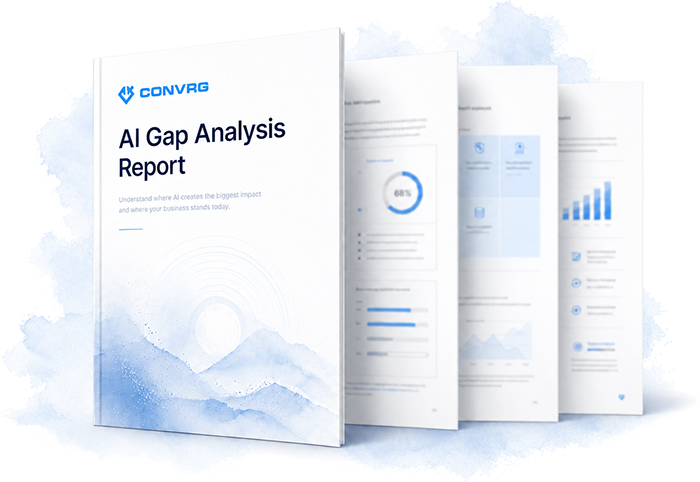
AI systems are already shaping which companies buyers notice, trust and shortlist.
AI Visibility tells you the score. AI Gap Analysis explains the game.
Visibility monitoring shows where your business appears across AI-generated answers. AI Gap Analysis goes deeper, helping you understand why competitors are being recommended more consistently and what that could mean commercially.

The AI Gap Analysis is a structured diagnostic that helps businesses understand why competitors may be appearing more consistently inside AI-generated recommendations.
It looks beyond simple mentions, screenshots or visibility scores to explore the patterns behind AI recommendations, including:
The aim is not just to ask:
“Did we appear?”
The better question is:
“Why are competitors being recommended more often?”
Buyers are increasingly using tools such as:

to research suppliers - compare providers - build shortlists - validate decisions
That means AI recommendation environments are starting to influence commercial discovery before prospects ever visit your website.
For many businesses, the problem is not complete invisibility. The problem is that they may appear occasionally, while competitors appear more consistently, more confidently, or in stronger buying contexts.
Most businesses still have limited understanding of:
The AI Gap Analysis is intended to help close that understanding gap.
The AI Gap Analysis is being developed to help businesses understand:
The goal is not simply more reporting.
The goal is clearer commercial interpretation.
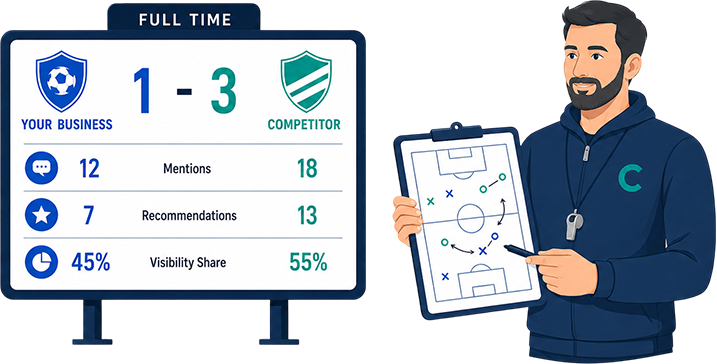
AI Visibility is the scoreboard.
It tells you who is showing up.
AI Gap Analysis is the coach’s review.
It explains why competitors may be ahead, where they are stronger, and what needs attention next.
The AI Gap Analysis is designed to build on top of a structured AI visibility baseline.
Businesses already using:
will typically gain more value from deeper analysis because the visibility environment is already organised and measurable.
This is why many businesses first establish:
before moving into deeper analysis.
AI Visibility Setup helps you see where you stand.
AI Gap Analysis helps you understand why that position may exist.
If your visibility tracking is not yet structured, the best next step may be to establish a clearer baseline first.
The AI Gap Analysis is being designed for:
It is especially relevant for businesses wanting to understand:
The AI Gap Analysis framework is being shaped by live AI visibility work, not theory alone.
This means the methodology is informed by:
That helps keep the analysis grounded in how AI recommendation environments are actually behaving.
“Did you appear?”
The focus is:
“Why are competitors being recommended more consistently?”
Visibility alone does not explain the commercial picture.
You need to know whether your business is showing up, but you also need to understand why competitors may be earning more attention, more trust, and stronger shortlist positions.
The AI Gap Analysis framework is currently being shaped through live AI visibility work.
Businesses can register interest now and discuss whether early-stage participation may be suitable.
No.
The AI Gap Analysis is not a traditional SEO audit. It focuses specifically on AI recommendation visibility, competitor interpretation, prompt-level discovery and commercial visibility signals.
SEO may influence the picture, but the analysis is broader than rankings, traffic and technical optimisation.
No.
The AI Visibility tools establishes the structured tracking foundation.
The AI Gap Analysis is designed to build on top of that visibility baseline by helping businesses interpret why certain patterns may be appearing.
The primary focus is understanding recommendation patterns, competitor visibility, AI interpretation behaviour and commercial visibility gaps.
The first step is clarity. Execution should come after the business understands what the visibility gap actually means.
Not always, but it helps.
AI Gap Analysis works best when there is already some visibility evidence to analyse, such as prompt tracking, competitor mapping, or a baseline view of where your business appears across AI-generated answers.
If that baseline does not exist yet, we may recommend starting there first before moving into deeper analysis.
Start With The CONVRG AI Guide
Most businesses are still treating AI visibility like traditional SEO.
This guide explains:


AI Gap Analysis helps explain why competitors may be appearing more often, which prompts may matter most, and where the commercial visibility gap may already exist.
For some businesses, the next step is the AI Visibility Blueprint.
The Blueprint turns AI visibility and gap findings into a clearer action plan across content, positioning, authority, sources, prompts and commercial priorities.
In simple terms:
AI Gap Analysis explains why the gap exists.
AI Visibility Blueprint shows what to do next.
Explore The AI Visibility Blueprint →
Complete the form below and we’ll review your details to see whether AI Gap Analysis is likely to be relevant for your business.
AI Gap Analysis works best when there is enough visibility evidence to interpret. That may include prompt tracking, competitor mapping, AI answer examples, existing visibility reports, or early signs that competitors are appearing more often in AI-generated recommendations.
If your visibility baseline is not yet structured, we may suggest starting with a simple AI visibility review before moving into deeper analysis.
This is designed for businesses already exploring AI visibility, investing in SEO or content, tracking competitors, or beginning to notice competitor visibility patterns inside AI-generated answers.
We manually review each request before confirming whether AI Gap Analysis is the right next step. If your visibility tracking is not yet structured, we may recommend starting with AI Visibility Setup first. If you are earlier in the journey, we may suggest the AI Visibility Walkthrough or AEO Guide instead.